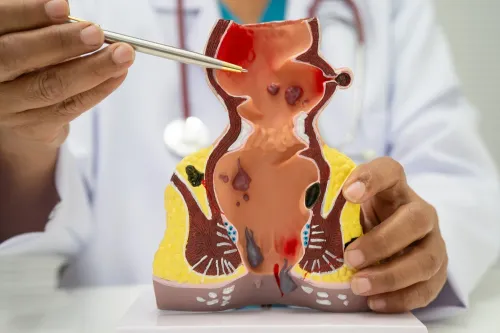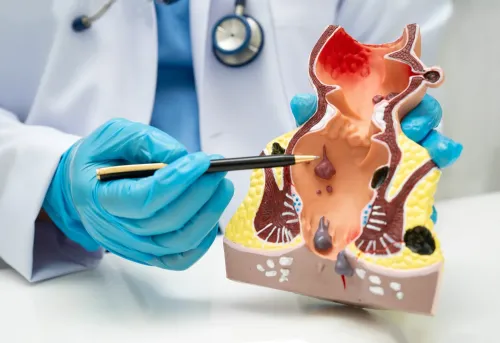
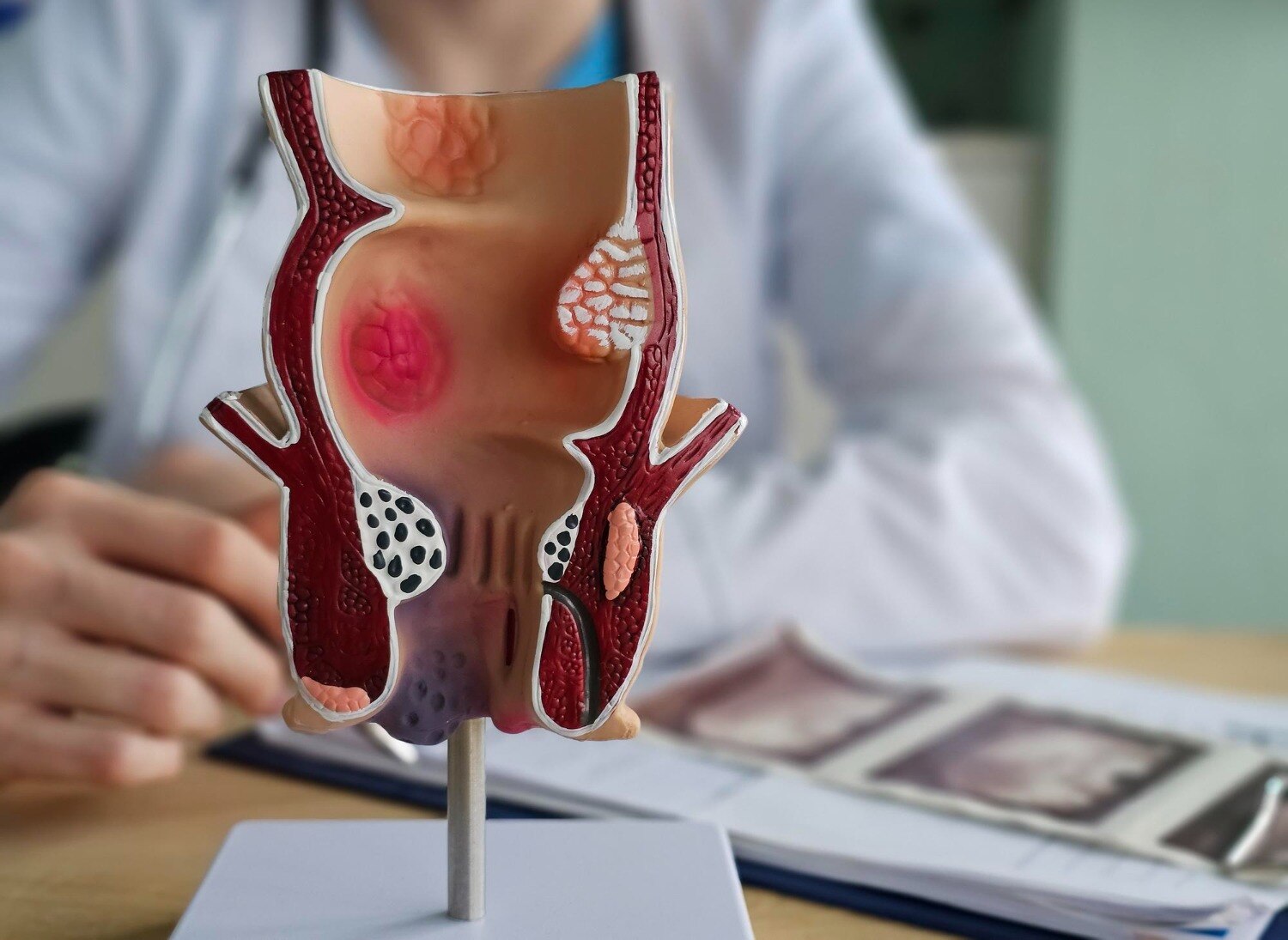
Mild anal itching, a small amount of bright-red blood, or brief discomfort can sometimes settle with careful home measures. Heavy bleeding, severe pain, infection signs, recurring symptoms, or uncertainty about the cause calls for an examination; the guide below helps you decide how quickly to seek care and what to expect.
Key takeaways
- Try home care for up to seven days when symptoms are mild.
- Seek urgent assessment for heavy bleeding, severe pain, fever, or dizziness.
- Arrange an examination when symptoms persist, recur, or worsen.
- A clinic can identify the cause before you choose treatment.
When Is Home Care Reasonable for a Short Trial?
Home care for piles is reasonable for up to seven days when symptoms are mild: itching, irritation, modest swelling, or discomfort after constipation. A single small streak of bright-red blood after a hard stool may also allow a short trial, but do not assume every episode of rectal bleeding is piles.
Use this routine:
- Increase fibre gradually through vegetables, fruit, whole grains, or a fibre supplement. Drink adequate fluids so stools remain soft.
- Do not strain, hold your breath, or sit on the toilet scrolling. Leave when you have finished.
- Take a warm sitz bath for 10 to 15 minutes, especially after a bowel movement.
- Use hydrocortisone or a local anaesthetic only as the label directs. Stop after the stated short course; repeated use can irritate or thin the skin.
| Symptom | Home trial | Arrange assessment |
|---|---|---|
| Mild itching or discomfort | Fibre, fluids, baths, and less straining | If it lasts beyond seven days or returns |
| Small lump without severe pain | Keep stools soft and avoid pressure | If it enlarges, persists, or repeatedly returns |
| One small bright-red streak | Observe while correcting constipation | If bleeding repeats, continues, mixes into stool, or comes with bowel changes |
Seek urgent care instead of continuing home treatment for heavy bleeding, black stools, faintness, severe pain, fever, or a rapidly worsening lump.
Which Symptoms Need Urgent Medical Assessment?
Heavy rectal bleeding, bleeding that does not stop, or repeated large-volume bleeding needs urgent medical assessment rather than a routine appointment. Seek emergency care if bleeding comes with dizziness, fainting4, severe weakness, or a rapid heartbeat.
| Symptom | Why it needs urgent assessment | Action |
|---|---|---|
| Heavy or continuous rectal bleeding | Blood loss can become significant, and the source may not be piles | Go to urgent care now |
| Black stools or tarry stools | This can indicate bleeding higher in the digestive tract | Seek emergency medical care |
| Severe or rapidly worsening anal pain | A thrombosed lump, abscess, or another urgent condition may be present | Arrange same-day assessment |
| Fever, pus, spreading redness, or chills | These suggest infection, including a possible abscess or fistula | Seek urgent medical care |
| A painful lump that does not settle | An abscess may need drainage rather than creams or baths | Get examined promptly |
Do not label new rectal bleeding as piles without an examination. Bleeding mixed into stool, altered bowel habits, weight loss, abdominal pain, or anaemia needs prompt medical evaluation to exclude inflammatory bowel disease, polyps, or colorectal cancer.
After rubber-band ligation, worsening pain, delayed bleeding, fever, or difficulty passing urine also requires medical advice. These symptoms can signal a complication, and repeating home treatment can delay appropriate care.
When Should Ongoing or Recurrent Symptoms Be Examined?
Arrange a routine clinic visit if bleeding, pain, itching or a lump has not clearly improved after seven days of sensible home measures. Book sooner for recurrent rectal bleeding, even when each episode is small. Symptoms that disappear and then return also need examination rather than another cycle of self-treatment.
- Note when symptoms started, how often they occur, and whether blood is on the paper, coating the stool or mixed into it.
- Arrange an appointment within a few days if bleeding keeps returning, pain remains sharp, itching persists, or a lump does not shrink after a week.
- Mention altered bowel habit, abdominal pain, weight loss, unusual tiredness or known anaemia. These details can change which tests you need.
Self-diagnosis is unsafe because rectal bleeding does not prove you have piles. A persistent tear with sharp pain during or after a bowel movement may be an anal fissure. Pus-like drainage from a small opening can indicate an anal fistula, while inflammatory bowel disease, polyps and colorectal cancer can also cause bleeding.
A clinician can inspect the area, perform a digital rectal examination and use anoscopy when needed. Colonoscopy is not automatic for every person with piles, but age, bleeding pattern, bowel changes and cancer risk can make it appropriate. Do not keep applying haemorrhoid cream when symptoms persist; it can delay the correct diagnosis.
Who Should Arrange an Earlier Examination?
Arrange an earlier examination if you are over 45 and develop new rectal bleeding, even when the bleeding is small or painless. Bleeding is not automatically caused by piles, and early symptoms of bowel disease can look minor.
| Finding | Why it changes the decision | What to do |
|---|---|---|
| Rectal bleeding over 45 | Polyps and colorectal cancer need consideration alongside piles | Book an examination rather than repeating home treatment |
| Bleeding mixed into stool | The source may be higher in the bowel, not at the anal opening | Arrange prompt medical review |
| Altered bowel habits | New constipation, diarrhoea, narrower stools or urgency can indicate bowel disease | Tell the clinician exactly when the change began |
| Anaemia, unexplained weight loss or abdominal symptoms | These findings need a wider assessment than a piles check | Arrange an appointment promptly |
| Higher colorectal-cancer risk | A close family history or previous bowel polyps changes screening decisions | Ask whether colonoscopy is appropriate |
Arrange review sooner if you take blood thinners, have inflammatory bowel disease, or have reduced immunity. A clinician may use inspection, a digital rectal examination and anoscopy; colonoscopy is recommended according to your age, symptoms, bleeding pattern and risk, not automatically for every case.
Do not wait for home care to “prove” the cause when symptoms are new or unexplained. Identifying the source early prevents repeated creams from delaying treatment for fissure, inflammatory bowel disease, polyps or colorectal cancer.
What Can a Clinic Determine Before You Choose Treatment?
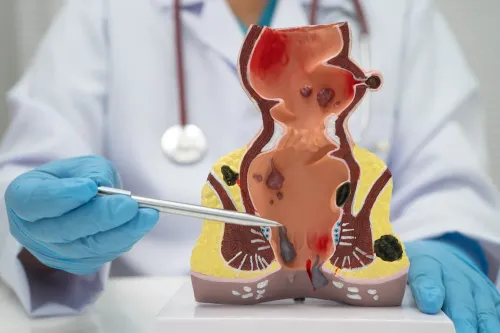
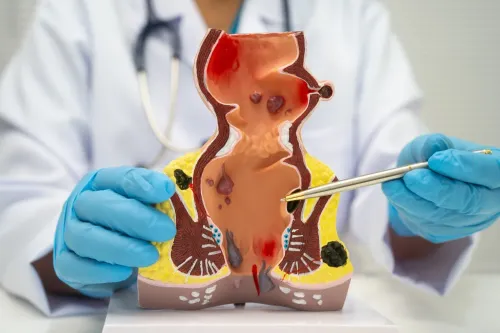
Inspection, a digital rectal examination and, when needed, anoscopy show whether bleeding comes from internal haemorrhoids or another condition. The clinician also checks prolapse: grade I does not protrude, grade II returns by itself, grade III needs manual replacement and grade IV stays outside.
| Finding | What examination suggests | Usual treatment decision |
|---|---|---|
| Internal haemorrhoids | Bleeding or prolapse inside the anal canal; anoscopy confirms the site | Fibre and stool-softening first; rubber-band ligation treats suitable internal piles, not external piles |
| External haemorrhoid lump | Lump at the anal edge; a blue, suddenly painful lump suggests a thrombosed external haemorrhoid | Pain control may suffice; severe early thrombosis may need clot or haemorrhoid removal |
| Anal fissure | A visible tear with sharp pain during or after a bowel movement | Prescription topical treatment, botulinum toxin or surgery if persistent |
| Abscess | Tender swelling, warmth, pus or fever | Prompt drainage and infection treatment; creams will not cure it |
| Fistula | A small opening, recurrent discharge or a track from the anus | Specialist assessment and a procedure to address the tract |
Arrange specialist treatment when grade III or IV prolapse persists, pain is severe, a lump rapidly worsens, or a fissure fails to heal with fibre and stool-softening. Do not assume every bleed is piles; colonoscopy depends on your age, bleeding pattern and colorectal-cancer risk.
Dr Gowri Singh-Best Laser Piles Surgeon in Pune can help match the examination finding to an appropriate procedure rather than treating every anal symptom with laser surgery.
Related services
Piles Doctor in Pune Piles Doctor in Viman Nagar, Kharadi, Vishrantwadi, Pune Dr Gowri Singh is the Best Piles Doctor, Laser Piles Surgeon, Laser Piles Doctor, Lady Piles Doctor in Viman Nagar, Kalyani Nagar, Koregaon Park,... View service → |
Laser Piles Surgeon in Pune Laser Piles Surgeon in Viman Nagar, Kharadi, Vishrantwadi, Pune Dr Gowri Singh is the Best Laser Piles Surgeon in Pune, specializing as a Piles Surgeon, Laser Piles Doctor, and Lady Piles Surgeon in Viman Nagar,... View service → |
Frequently asked questions
When is home care reasonable for piles?
Try home care for up to seven days when symptoms are mild, such as itching, irritation, modest swelling, or discomfort after constipation. A single small streak of bright-red blood after a hard stool can also allow a short trial.
Which piles symptoms need urgent medical assessment?
Seek urgent assessment for heavy or ongoing rectal bleeding, black stools, severe pain, fever, faintness, or dizziness. Do not assume significant or repeated bleeding is caused by piles.
When should ongoing or recurrent piles symptoms be examined?
Arrange an examination when symptoms last beyond seven days, return repeatedly, worsen, or include repeated rectal bleeding. Persistent symptoms need a confirmed diagnosis rather than repeated self-treatment.
Who should arrange an earlier examination for piles symptoms?
Arrange an earlier examination if you take blood-thinning medicine, have a history of bowel disease or colorectal cancer, or develop unexplained weight loss, altered bowel habits, or anaemia symptoms.
What can a piles clinic determine before treatment?
A clinician can assess whether symptoms fit piles or another anal or bowel condition, identify the likely type and severity, and discuss suitable treatment options before you decide.