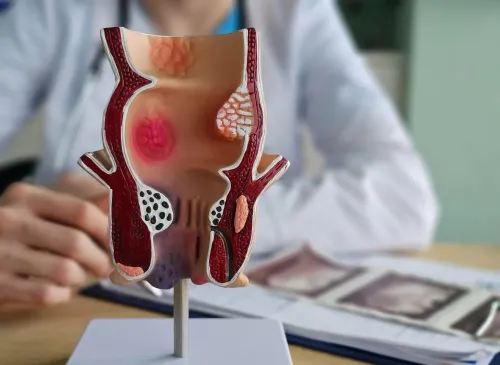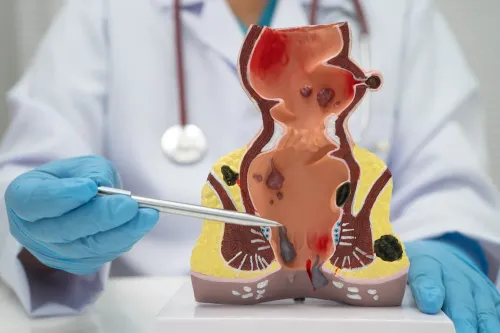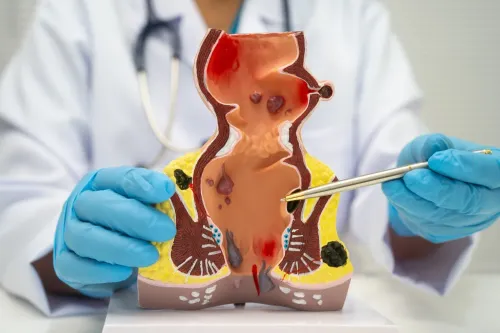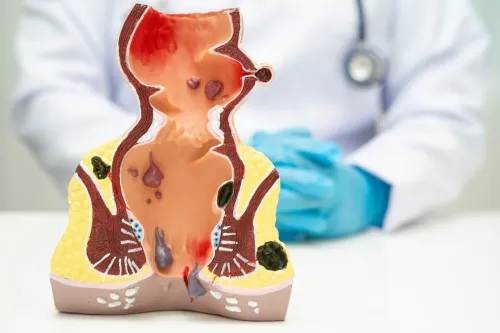
Rectal bleeding, anal pain, itching or a lump can come from several conditions that need different examinations and treatments. By the end, you will know what to report, what each part of the appointment involves, which tests can clarify the diagnosis and when symptoms require urgent assessment.
Key takeaways
- Describe bleeding colour, timing, pain, itching, discharge, and swelling.
- Expect inspection, a digital rectal examination, and targeted testing.
- Anoscopy examines the anal canal; colonoscopy investigates the wider colon.
- Match follow-up to the diagnosis, severity, treatment, and warning signs.
What should you tell the proctologist before the examination?
Tell the proctologist exactly what happens, not simply that you have “piles.” Describe bleeding colour and frequency: bright-red streaks on paper differ from dark, tarry stool or blood mixed through stool. Report pain during or after bowel movements, itching, discharge, and swelling or prolapse, including when each began and whether it is worsening.
Also mention constipation, diarrhoea, narrower stools, weight loss, fever, abdominal pain, prior anorectal disease or surgery, pregnancy, blood thinners, immune suppression, and personal or family history of colorectal cancer or inflammatory bowel disease.
Seek urgent assessment rather than waiting for a routine appointment if you have:
- Heavy or repeated bleeding, dizziness, fainting, or black stool.
- Fever with rapidly increasing anal pain, swelling, pus-like discharge, or difficulty passing urine.
- Severe pain with a tender lump, especially when it began suddenly.
- Inability to pass stool or gas with abdominal distension and vomiting.
| Details that change priority | What they may signal | Likely next step |
|---|---|---|
| Bright-red bleeding with weight loss, anaemia, changed bowel habit, or family history | Colorectal disease | Broader evaluation, possibly colonoscopy |
| Severe tearing pain during and after defecation | Anal fissure | Gentle inspection; defer forceful examination if pain is extreme |
| Constant throbbing pain, swelling, fever, or discharge | Abscess or fistula | Prompt examination for drainage |
What happens during the anorectal examination?
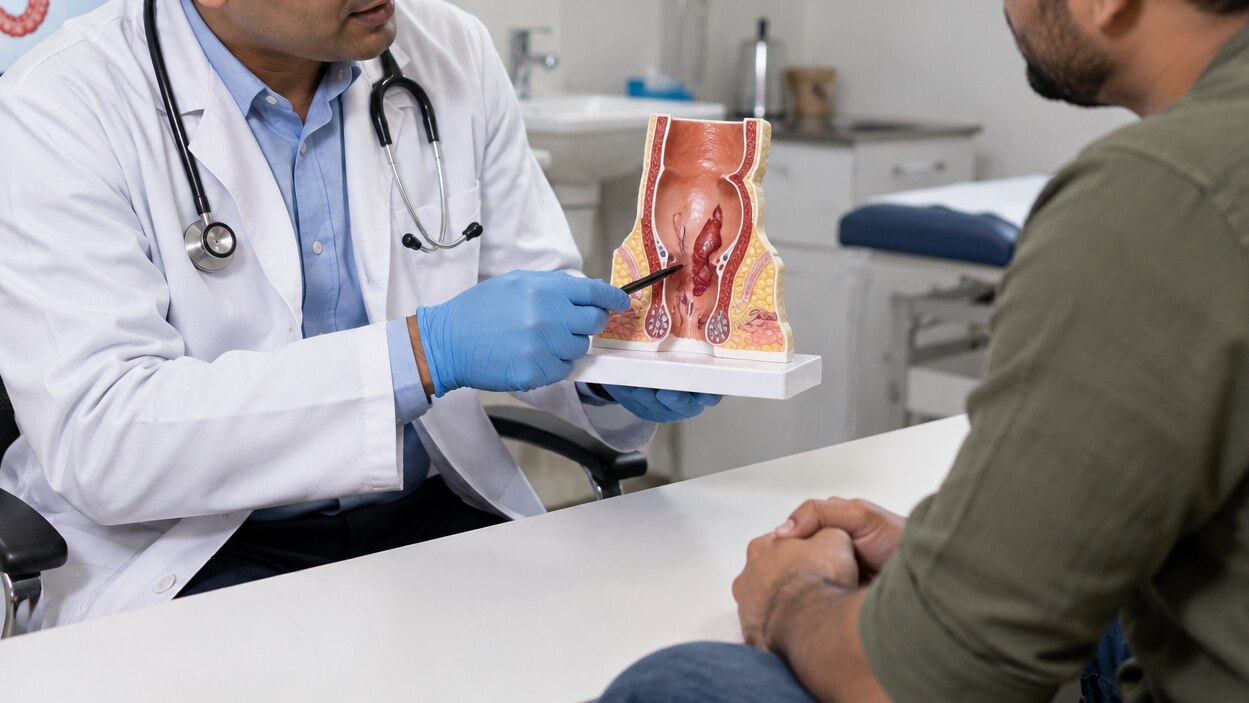
The examination begins with visual inspection of the skin around the anus. Lying on your side with your knees drawn up, you will be covered as much as possible while the clinician checks for swelling, a thrombosed external haemorrhoid, fissure, discharge, fistula opening, rash or prolapse.
A visible fissure can explain severe tearing pain, so forceful examination may be deferred.
A digital rectal examination uses a gloved, lubricated finger inserted slowly into the anal canal and lower rectum. The clinician checks tenderness, anal-muscle tone, lumps, narrowing, blood and abnormalities on the rectal wall. You may feel pressure, an urge to pass stool or brief discomfort; sharp pain is a reason to stop and reassess.
Lubrication reduces friction, and topical local anaesthetic can help when the area is very tender.
Anoscopy uses a short, hollow instrument with a light to inspect the anal canal directly. The clinician inserts the lubricated anoscope gently, then withdraws it while looking for internal haemorrhoids, inflamed tissue, bleeding points or a mucosal lesion. Expect pressure and fullness for a few minutes, not a long procedure.
A normal digital rectal examination does not exclude a lesion higher in the anal canal or rectal lining; anoscopy provides that closer view. If pain prevents an adequate examination, assessment under anaesthesia may be considered.
How does the examination distinguish piles from other conditions?
The key distinction is the combination of pain, bleeding pattern, visible changes and findings inside the anal canal—not the presence of a palpable lump alone. Bright-red blood can come from several conditions, so a haemorrhoid should not end the examination.
| Condition | Findings that support the diagnosis |
|---|---|
| Internal haemorrhoids | Usually painless bleeding or a soft prolapsing tissue seen on anoscopy. Goligher grade I bleeds without prolapse; grade II prolapses with straining and reduces itself; grade III needs manual reduction; grade IV stays prolapsed and cannot be reduced. |
| External haemorrhoids | A tender lump at the anal edge points to an external haemorrhoid. Sudden severe pain with a blue or purple lump suggests thrombosis. |
| Anal fissure | A visible linear tear, commonly at the back or front of the anal opening, causes sharp pain during or after bowel movements. A sentinel skin tag and sphincter spasm support the diagnosis. |
| Abscess | Constant throbbing pain, warmth, redness, swelling, fever or a fluctuant tender area suggests a collection of pus, even when little is visible. |
| Fistula | A skin opening, persistent discharge, induration or a palpable tract, especially after a previous abscess, suggests a fistula. The external opening does not show the tract’s full course. |
| Rectal prolapse | Concentric folds of prolapsed rectal tissue distinguish it from the radial folds of prolapsed internal haemorrhoids. |
| Skin disease | Itching, scaling, cracks, moisture-related irritation, blisters or sharply bordered plaques suggest dermatitis, fungal infection, psoriasis or another skin disorder. |
| Colorectal disease | A hard irregular mass, ulcerated mucosa, unexplained anaemia, weight loss or a sustained change in bowel habit requires further assessment. A normal digital examination does not exclude a lesion higher in the rectum or anal canal. |
Pain may prevent a complete examination; persistent concern then requires further testing rather than reassurance based on a small haemorrhoid.
When are anoscopy, proctoscopy or colonoscopy enough?
Anoscopy or proctoscopy is enough when examination identifies a typical fissure, visible haemorrhoid or uncomplicated fistula and no warning features suggest disease higher in the bowel. A normal digital rectal examination does not exclude an anal-canal or rectal mucosal lesion, so persistent bleeding still needs an appropriate view.
| Option | What it shows | When it applies |
|---|---|---|
| Office examination | Skin, swelling, fissure, prolapse and tenderness | Straightforward symptoms; severe fissure pain may require inspection alone |
| Anoscopy | Anal canal and internal haemorrhoids | Suspected haemorrhoids, bleeding or anal-canal disease |
| Proctoscopy | Anus and rectum through a longer scope | A suspected rectal lesion or bleeding source beyond anoscopy |
| Sigmoidoscopy | Rectum and sigmoid colon | Bleeding or bowel symptoms needing assessment of the lower colon |
| Colonoscopy | The entire colon and often the terminal ileum | Age, family history, altered bowel habit, weight loss or bleeding that could arise higher up |
| Blood or stool tests | Anaemia, infection, inflammation or occult blood | Symptoms suggesting a systemic condition; these tests do not diagnose routine piles |
| Imaging or examination under anaesthesia | Fistula tracks, abscesses or areas inaccessible because of pain | Recurrent, branching or complex fistula, Crohn disease, unclear anatomy or intolerable examination |
A pelvic MRI with an MRI fistula protocol or endoanal ultrasound is not routine for a clear, simple fistula. Examination under anaesthesia allows a thorough assessment and treatment planning when pain prevents an adequate office examination.
How should you act on the findings and choose follow-up?
A straightforward examination can end the diagnostic work-up when the clinician sees typical haemorrhoids, your symptoms match, there are no warning signs, and a clear treatment plan includes a review date. Do not let a visible pile explain persistent rectal bleeding without checking for another source.
Seek urgent assessment for:
- Fever and urinary difficulty, rapidly increasing anal pain or swelling, faintness, or widespread illness.
- A suspected perianal abscess: perianal abscess drainage provides source control; antibiotics alone do not replace drainage.
- New bleeding with anaemia and weight loss, a major change in bowel habit, narrow stools, or bleeding that continues after treatment.
| Finding | Follow-up |
|---|---|
| Typical haemorrhoids, no red flags | Treat constipation or diarrhoea, follow the plan, and return if bleeding or pain persists. |
| Unexplained bleeding, anaemia, weight loss, altered bowel habit, or high colorectal-cancer risk | Arrange colonoscopy rather than assuming piles are responsible. |
| Fistula opening, recurrent drainage, or a tract that is difficult to map | See a colorectal specialist; pelvic MRI or endoanal ultrasound may be needed. |
| Pain preventing an adequate examination | Arrange examination under anaesthesia. |
A normal finger examination does not exclude a mucosal lesion. In Pune, Dr Gowri Singh-Best Laser Piles Surgeon in Pune is one option for specialist follow-through when symptoms persist or the diagnosis remains uncertain; ask what finding justifies each proposed procedure.
Related services
Piles Doctor in Pune Piles Doctor in Viman Nagar, Kharadi, Vishrantwadi, Pune Dr Gowri Singh is the Best Piles Doctor, Laser Piles Surgeon, Laser Piles Doctor, Lady Piles Doctor in Viman Nagar, Kalyani Nagar, Koregaon Park,... View service → |
Laser Piles Surgeon in Pune Laser Piles Surgeon in Viman Nagar, Kharadi, Vishrantwadi, Pune Dr Gowri Singh is the Best Laser Piles Surgeon in Pune, specializing as a Piles Surgeon, Laser Piles Doctor, and Lady Piles Surgeon in Viman Nagar,... View service → |
Frequently asked questions
What should you tell a proctologist before the examination?
Describe bleeding colour and frequency, pain during or after bowel movements, itching, discharge, swelling, prolapse, onset, and whether symptoms are worsening. Mention dark, tarry stool or blood mixed through stool promptly.
What happens during an anorectal examination?
The proctologist usually inspects the skin and anal opening, then performs a digital rectal examination with a gloved, lubricated finger. They may use an anoscope or proctoscope to view the anal canal and rectum.
How does the examination distinguish piles from other conditions?
The clinician compares the location and appearance of swelling, bleeding, or prolapse with your pain and other symptoms. Examination helps separate piles from fissures, fistulas, abscesses, infections, polyps, and other causes of rectal bleeding.
When are anoscopy, proctoscopy, or colonoscopy enough?
Anoscopy examines the anal canal, while proctoscopy views farther into the rectum. Colonoscopy is used when symptoms, age, family history, examination findings, or bleeding patterns require assessment of the entire colon.
How should you act on the findings and choose follow-up?
Ask for the exact diagnosis, treatment options, warning signs, and review date. Follow the plan and seek prompt medical care for heavy bleeding, black stools, fever, severe pain, or a persistent change in bowel habits.
Related services
Anal Fissure Treatment Doctor in Pune Anal Fissure Treatment Doctor in Viman Nagar, Kharadi, Vishrantwadi, Pune Dr Gowri Singh is the Best Anal Fissure Treatment Doctor in Viman Nagar, Kalyani Nagar, Koregaon Park, Vishrantwadi, Kharadi, Wagholi and Pune. View service → |
Fistula Treatment Doctor in Pune Fistula Treatment Doctor in Viman Nagar, Kharadi, Vishrantwadi, Pune Dr Gowri Singh is the Best Fistula Treatment Doctor in Viman Nagar, Kalyani Nagar, Koregaon Park, Vishrantwadi, Kharadi, Wagholi and Pune. View service → |