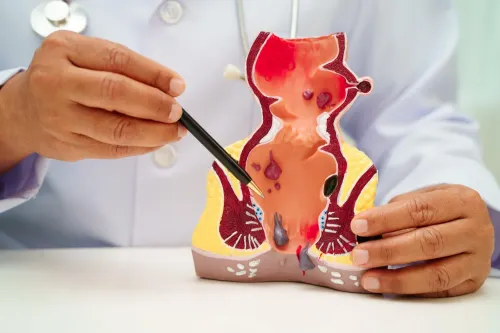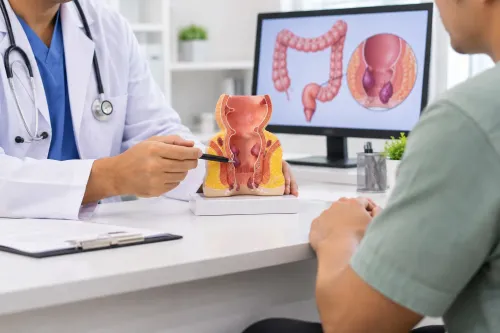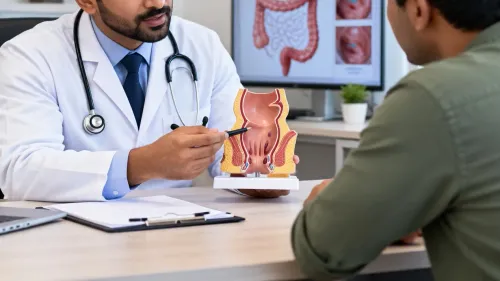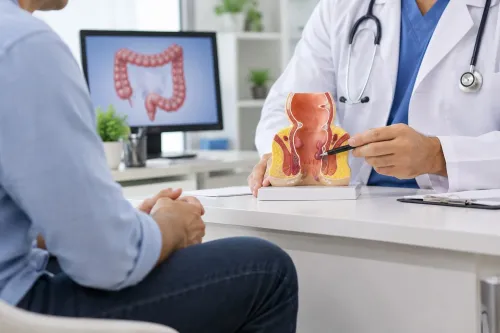
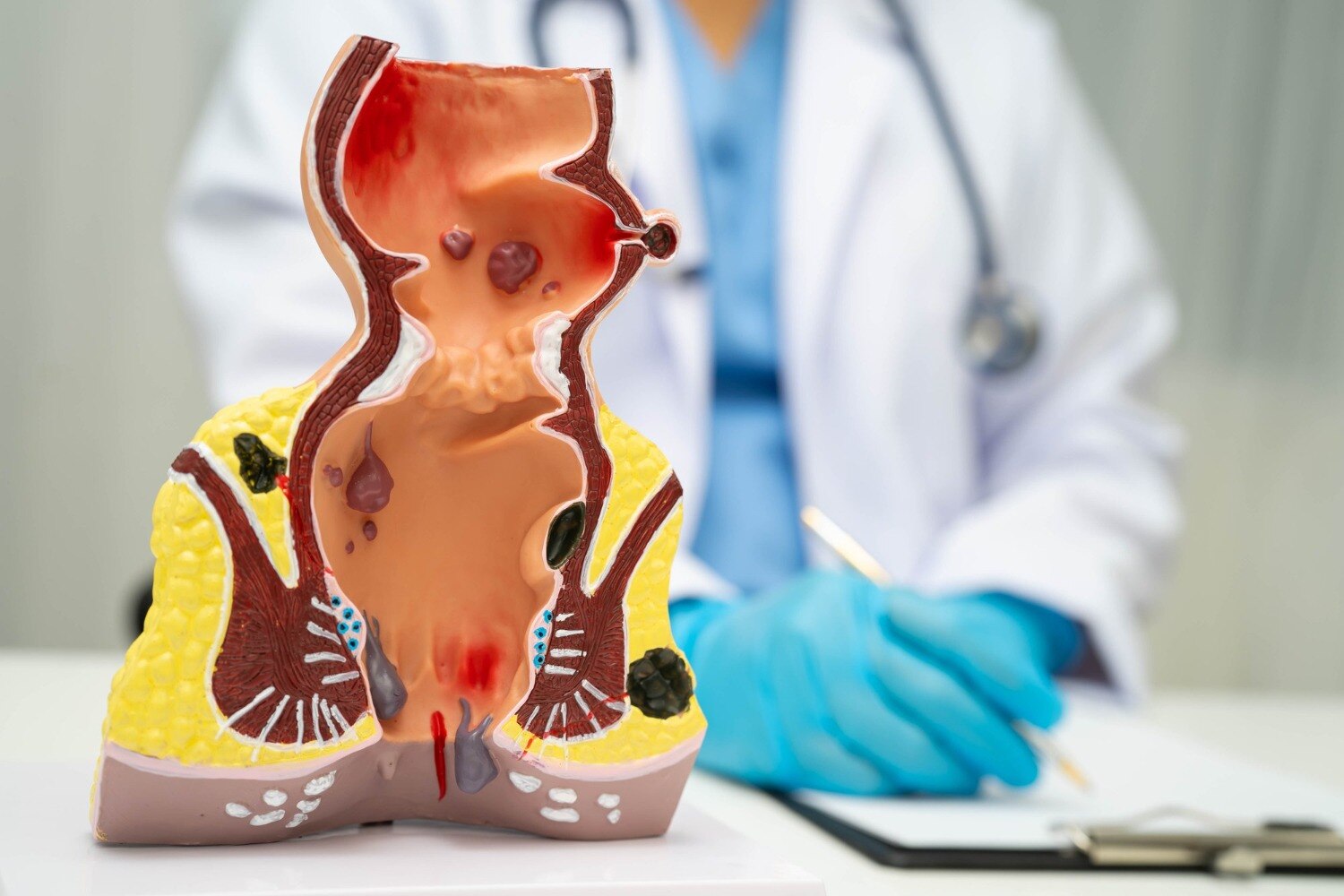
Rectal bleeding deserves attention when it persists, returns, or appears with pain, bowel changes, weakness, or other warning signs. By sorting the bleeding pattern and accompanying symptoms, you can decide whether to monitor one minor episode, book a specialist appointment, seek same-day care, or go directly to an emergency department.
Key takeaways
- Seek emergency care for heavy bleeding, black stool, fainting or signs of shock.
- Bright red blood suggests a lower source but does not confirm piles.
- Arrange assessment for persistent bleeding, recurring pain or changes in bowel habits.
- Bring symptom timing, medicines and previous test reports to your consultation.
Decide how urgently you need medical care
Heavy bleeding or continuous bleeding requires an emergency department visit, especially if you pass clots or develop dizziness or fainting, confusion, a rapid heartbeat, severe weakness, severe abdominal pain, or signs of shock such as cold, clammy skin. Black, tarry stool also needs emergency assessment because it can signal bleeding higher in the digestive tract.
Seek same-day medical care when bleeding is ongoing but not severe, returns several times, or occurs with fever, vomiting, marked anal or abdominal pain, weakness, or a blood-thinning medicine such as warfarin, apixaban, or aspirin. Do not drive yourself if you feel faint.
Book a routine appointment with a piles or colorectal specialist for a small episode that has stopped and leaves you feeling well, but arrange assessment if persistent rectal bleeding continues, recurs, or has no clear cause.
A bright-red smear does not prove piles; fissures, inflammatory bowel disease, polyps, medication-related bleeding, and colorectal cancer can also cause it.
At the visit, expect an inspection, digital rectal examination, and, when appropriate, anoscopy or proctoscopy. Ask whether you need a complete blood count, iron studies, or colonoscopy; a normal haemoglobin result does not make intermittent bleeding harmless.
Finding haemorrhoids does not exclude another source, so follow the recommended investigation rather than treating every episode as piles.
Use the blood’s appearance as a clue, not a diagnosis
The colour and pattern of blood offer clues about its source, but they cannot confirm piles. Even typical internal-haemorrhoid bleeding is usually painless, so pain changes the picture.
| Pattern | What it may indicate |
|---|---|
| Bright-red blood on toilet paper | A small fissure, irritated skin, or internal haemorrhoids, especially after hard stool. A fissure usually causes sharp or burning pain during and after a bowel movement. |
| Blood dripping into the bowl | Internal haemorrhoids can cause this after straining, but repeated dripping or a larger volume needs assessment because the blood loss may be greater than it appears. |
| Blood mixed through stool | Bleeding from higher in the rectum or colon, including inflammation, polyps, diverticular disease, or colorectal cancer. Do not assume piles. |
| Maroon stool | Faster or heavier bleeding from the colon or lower digestive tract; seek prompt medical advice, particularly if it recurs or comes with weakness or dizziness. |
| Black, tarry stool | Digested blood from the stomach or upper intestine, although iron tablets and bismuth medicines can also darken stool. Tarry, sticky stool requires urgent medical assessment. |
Seek emergency care for heavy or continuous bleeding, clots, fainting, marked dizziness, rapid heartbeat, confusion, severe abdominal pain, or unusual weakness. Tell the clinician about warfarin, a direct oral anticoagulant, aspirin, clopidogrel, or another blood-thinning medicine; do not stop it without medical advice.
Know when bleeding needs assessment even if it looks minor
After one small episode of clearly bright-red blood that stops, monitor it for 24 to 48 hours. Arrange a routine assessment if it returns, lasts beyond two days, or becomes bleeding for several days; do not keep treating it as piles without an examination.
Book a piles specialist sooner for recurrent rectal bleeding, even when each episode is small. Lower your threshold further if you take blood thinners, have iron-deficiency anaemia, or notice a persistent change in bowel habit or stool calibre.
| Finding or history | Why it lowers the threshold | What to arrange |
|---|---|---|
| Unexplained weight loss, abdominal lump, or increasing fatigue | These features need assessment for colorectal disease, not repeated self-treatment | Prompt specialist or medical appointment |
| First-degree family history of colorectal cancer | Family history can increase colorectal cancer risk | Early specialist review and advice on colon evaluation |
| Personal history of polyps or inflammatory bowel disease | Either condition can cause bleeding or raise future risk | Prompt review, with testing guided by your history |
| Bleeding mixed through stool or bleeding without constipation or straining | This pattern is less typical of uncomplicated internal piles | Specialist examination rather than observation |
| Anaemia, blood-thinner use, or bleeding after minor trauma | Blood loss or medication effects can be missed when the amount looks small | Medical review and medication assessment |
An inspection, digital rectal examination, and, when appropriate, anoscopy or proctoscopy can find fissures, thrombosed piles, inflammation, or a mass. A normal anal examination does not rule out disease higher in the bowel; your symptoms and risk factors may require colon evaluation.
Match discomfort and associated symptoms to possible causes
Sharp pain during bowel movements with a small amount of bright-red blood points more toward a fissure than piles. Persistent throbbing pain, swelling, pus, or fever needs prompt assessment for an abscess.
| Cause | Symptom combination | Likely implication |
|---|---|---|
| Piles | Bright-red blood, itching, fullness, or a lump; a bluish, very tender lump suggests thrombosis | Persistent bleeding still needs examination |
| Anal fissure | Sharp or burning pain during and after bowel movements with a small amount of bright-red blood | Often follows hard stool or straining |
| Abscess | Persistent throbbing pain, worsening swelling, pus, or fever | Seek same-day care; infection can spread |
| Fistula | Recurrent swelling that drains pus through a small opening near the anus | Arrange specialist assessment |
| Infection | Rectal pain, discharge, fever, sores, or marked urgency | Prompt testing and treatment are needed |
| Inflammatory bowel disease | Recurrent blood with diarrhoea, mucus, cramps, urgency, or weight loss | Requires medical evaluation |
| Polyps | Blood mixed with stool, often without pain, sometimes with altered bowel habit | Needs bowel evaluation |
| Rectal mass | Persistent bleeding with narrowed stools, tenesmus, anaemia, weight loss, or an abdominal mass | Investigate for colorectal disease |
| Medication-related bleeding | New or heavier bleeding while taking warfarin, apixaban, aspirin, or NSAIDs | Contact the prescriber; do not stop prescribed treatment alone |
Finding piles does not exclude a fissure, polyp, inflammatory bowel disease, or a rectal mass. Recurrent or unexplained bleeding warrants inspection, a digital rectal examination, and further bowel testing when symptoms indicate it.
Prepare for a specialist examination and treatment discussion
Bring your bleeding timeline: symptom history should cover colour, amount, recurrence, pain, bowel changes, weight loss and triggers. Expect a medication review, including warfarin, a direct oral anticoagulant, aspirin, clopidogrel and other blood-thinning drugs. Do not stop one yourself; the clinician must balance bleeding against clot risk before any procedure.
The visit usually includes inspection of the anus, a digital rectal examination and, when indicated, anoscopy or proctoscopy. These can locate fissures, thrombosed haemorrhoids, prolapse, inflammation or a mass. Finding piles does not rule out disease higher in the colon, so ask whether blood tests or colonoscopy is needed.
| Option | What it means | Compare before choosing |
|---|---|---|
| Examination findings | Identifies the likely source and severity | Ask whether the finding explains all your bleeding |
| Colonoscopy or other tests | Checks the colon when symptoms or risk factors require it | Ask what result would change treatment |
| Conservative care | Fibre, fluids, avoiding straining and prescribed medicines | Compare expected improvement with the time needed |
| Rubber-band ligation | Office treatment for selected internal haemorrhoids, not external ones | Ask about bleeding, pain and warning symptoms afterward |
| Surgery | More definitive correction for advanced or combined disease | Weigh stronger correction against more pain and recovery time |
| Laser treatment | A technique whose suitability depends on the exact diagnosis | Ask what tissue it treats, recurrence evidence and alternatives |
At Dr Gowri Singh-Best Laser Piles Surgeon in Pune, use those questions to compare a proposed laser procedure with established office treatment or surgery, rather than choosing by the word “laser” alone.
Related services
Piles Doctor in Pune Piles Doctor in Viman Nagar, Kharadi, Vishrantwadi, Pune Dr Gowri Singh is the Best Piles Doctor, Laser Piles Surgeon, Laser Piles Doctor, Lady Piles Doctor in Viman Nagar, Kalyani Nagar, Koregaon Park,... View service → |
Laser Piles Surgeon in Pune Laser Piles Surgeon in Viman Nagar, Kharadi, Vishrantwadi, Pune Dr Gowri Singh is the Best Laser Piles Surgeon in Pune, specializing as a Piles Surgeon, Laser Piles Doctor, and Lady Piles Surgeon in Viman Nagar,... View service → |
Frequently asked questions
When does rectal bleeding require emergency care?
Go to an emergency department for heavy or continuous bleeding, clots, dizziness, fainting, confusion, rapid heartbeat, severe weakness, severe abdominal pain, cold clammy skin or black, tarry stool.
Does bright red blood always mean piles?
No. Bright red blood often points to bleeding near the anus or lower rectum, but its appearance cannot diagnose piles. Persistent or recurring bleeding needs medical assessment.
When should minor-looking rectal bleeding be assessed?
Arrange an assessment when bleeding persists, returns, occurs with pain or bowel changes, or appears without a clear cause, even if the amount seems small.
What should I prepare before seeing a piles specialist?
Record the blood's colour and amount, when it appears, bowel symptoms, pain, medicines and previous reports. Tell the specialist about weight loss, fever or changes in stool pattern.