Treatment depends on more than how much a haemorrhoid prolapses. Once you know the confirmed grade, whether the problem is internal or external, and which symptoms need investigation, you can compare home measures, office procedures and surgery on effectiveness, recovery and recurrence rather than choosing by procedure name alone.
Key takeaways
- Haemorrhoid grade depends on prolapse, not bleeding or pain.
- Grades I and II usually start with bowel habit and non-surgical treatment.
- Compare recovery, recurrence, pain and suitability before choosing a procedure.
- Tell your surgeon about medicines, pregnancy, anaemia and other health conditions.
How the Four Internal Haemorrhoid Grades Are Confirmed
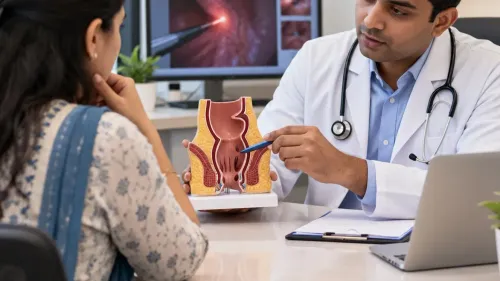
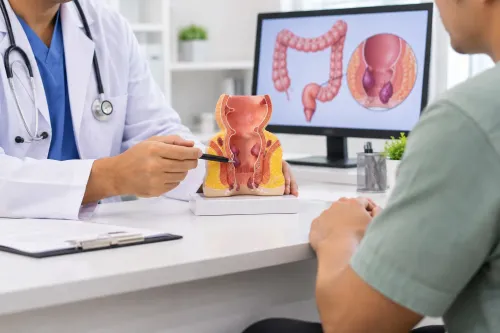
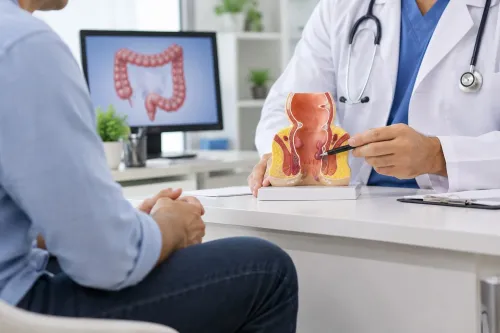
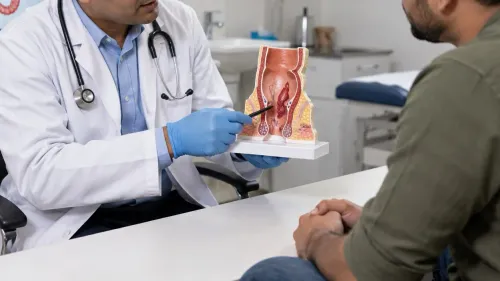
Internal haemorrhoids are graded by prolapse, not by how much they bleed or hurt. A clinician takes your bleeding history, asks whether tissue comes out during bowel movements, and confirms the finding with examination.
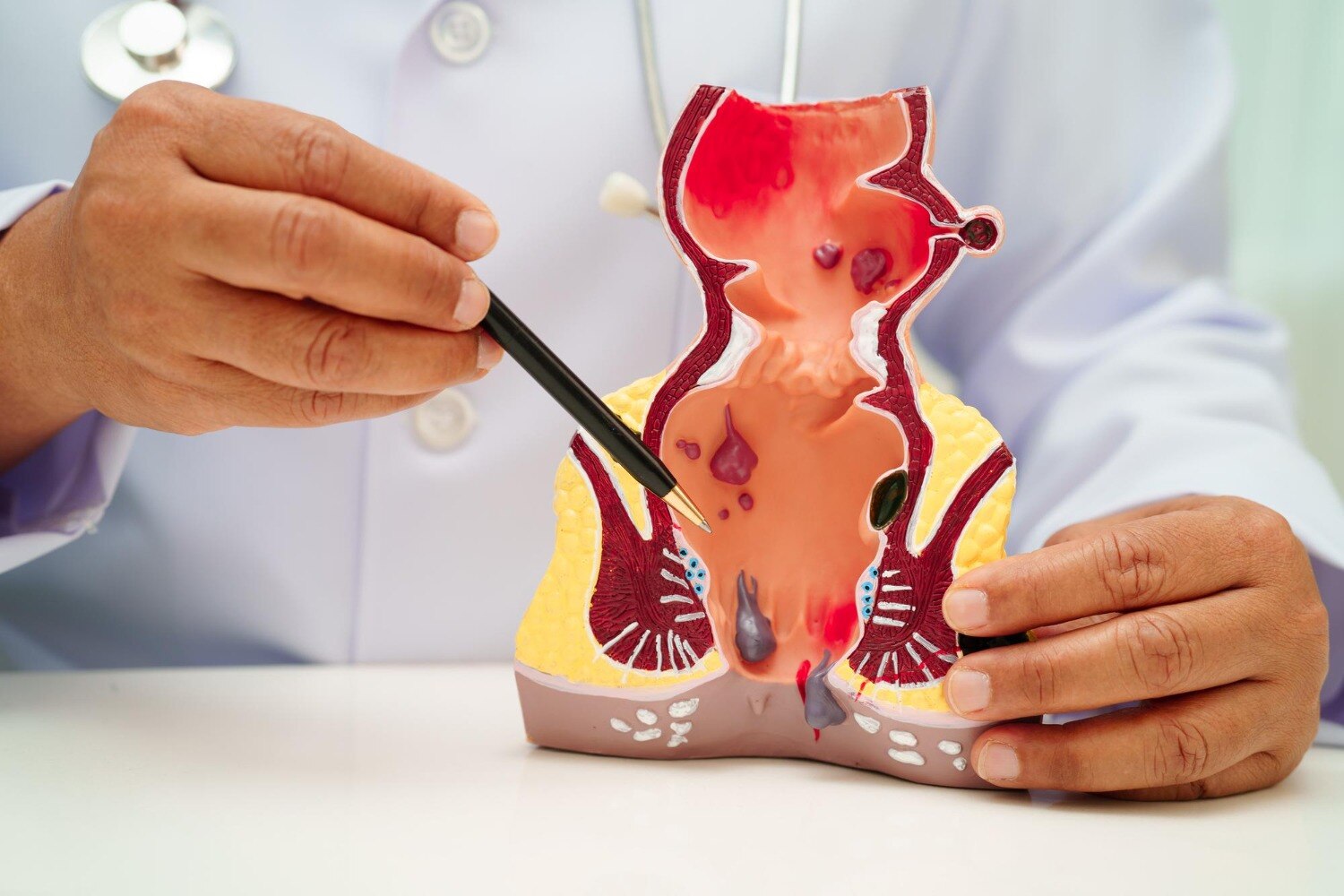
- Grade I piles stay inside the anal canal and do not prolapse.
- Grade II piles protrude when you strain but return inside without help.
- Grade III piles protrude and need a finger to push them back.
- Grade IV haemorrhoids remain outside and cannot be reduced.
The clinician inspects the anus for skin tags, fissures, a lump or a prolapsed mass. A digital rectal examination checks tenderness, masses and anal tone, while an anoscope lets the clinician see internal haemorrhoids directly and locate bleeding points.
External haemorrhoids do not use this grade system. A suddenly painful, bluish lump at the anal edge suggests a thrombosed external haemorrhoid, not Grade IV disease. A fissure, abscess, rectal polyp, inflammatory bowel disease or cancer can also cause bleeding, so do not assume every bright-red smear is piles.
Colonoscopy or another bowel investigation is important when bleeding is mixed with stool, recurrent, unexplained, accompanied by weight loss or altered bowel habits, or occurs with a family history of bowel cancer. In a Pune consultation context, discuss Grade III piles symptoms and treatment options alongside the examination findings, bleeding pattern and any external component.
Treatment Pathway for Grades I, II and Selected Grade III Haemorrhoids
Piles treatment by grade starts conservatively. For Grade I and mild Grade II haemorrhoids, increase fibre for haemorrhoids through vegetables, fruit, pulses or a fibre supplement, drink enough fluid, avoid straining, and answer the urge to pass stool. These changes are enough when bleeding, itching and prolapse settle within a few weeks.
1. Grade I: Continue fibre, fluids and regular bowel habits. A short course of a stool softener or topical medicine can control irritation or bleeding, but it does not correct the underlying cause. If symptoms persist, injection sclerotherapy for piles treatment in Pune, infrared coagulation or rubber-band ligation provides an office-based option.
2. Grade II: Use the same measures first. Choose rubber-band ligation when symptoms continue or recur; it usually offers stronger control than sclerotherapy or infrared coagulation, but discomfort, bleeding and repeat sessions are possible. Sclerotherapy or infrared coagulation suits selected patients who prioritise a less invasive procedure.
3. Selected Grade III: Consider an office procedure when the prolapse returns after manual replacement, has no substantial external component, and has not improved with conservative care. Rubber-band ligation is commonly considered, often over more than one session. Advanced prolapse, persistent symptoms or an external component may require a surgical discussion instead.
Medicines relieve symptoms; they do not permanently remove prolapsing tissue. Laser is not automatically the next step because laser coagulation, laser haemorrhoidoplasty and laser-assisted excision are different procedures with different evidence and recovery.
Choosing Laser, Doppler-Guided Procedures, Stapling or Excision
Advanced prolapse changes the choice: Grade IV disease or a large external component usually needs an operation that removes or firmly corrects tissue. Laser piles treatment is not one operation; laser coagulation, laser haemorrhoidoplasty and laser-assisted excision have different results.
| Option | Best fit and external component | Pain, anaesthesia and recovery | Bleeding control and recurrence |
|---|---|---|---|
| Laser coagulation or laser haemorrhoidoplasty | Selected internal prolapse; does not reliably correct Grade IV disease or a substantial external lump | Usually less tissue injury and earlier recovery; anaesthesia depends on the technique | Controls targeted bleeding, but long-term recurrence evidence is less consistent than for excision |
| Doppler-guided artery ligation with mucopexy | Selected Grade II or III internal prolapse; poor choice for a large external component | Often less early pain than excision; local, regional or general anaesthesia depends on the case | Good bleeding control, but recurrence rises with advanced prolapse |
| Stapled haemorrhoidopexy | Internal circumferential prolapse without a prominent external component | Often less early pain; recovery is usually quicker than excision | Lifts tissue rather than removing it; recurrence and further procedures are more likely |
| Excisional haemorrhoidectomy | Grade III or IV disease, persistent symptoms, or substantial external tissue | Stronger correction but more postoperative pain; regional or general anaesthesia is common, with longer recovery | Strong bleeding and anatomical control, with lower recurrence than less-invasive operations |
Compare Doppler-guided haemorrhoidal artery ligation Pune treatment options by asking which tissue will remain, how recurrence will be monitored, and what happens if prolapse returns. A “laser” label alone does not establish permanence or suitability.
When Other Health Factors Change the Treatment Decision
Urgent symptoms, a thrombosed external haemorrhoid, and conditions that increase bleeding or anaesthetic risk can make home care or a routine procedure unsafe.
1. Seek prompt medical assessment for heavy or persistent bleeding, black or maroon stools, dizziness, fainting, severe weakness, fever, pus, worsening swelling, or inability to pass urine.
Rectal bleeding warning signs also include unexplained weight loss, a lasting change in bowel habits, abdominal pain, iron-deficiency anaemia, or a family history of bowel cancer; do not assume these symptoms come from piles.
2. A painful, suddenly appearing bluish lump at the anal edge may be a thrombosed external haemorrhoid, not a prolapsing internal haemorrhoid. Severe early pain can justify urgent review for possible excision, while less severe cases often need pain relief, stool-softening measures and observation.
3. Plan haemorrhoid surgery recovery before agreeing to an operation. Excision can cause substantial pain, bleeding and difficulty sitting or working for a period, so arrange transport, time away from physical exertion, fluids, fibre and help at home. Severe pain, uncontrolled bleeding or urinary difficulty after treatment needs medical advice.
Pregnancy changes the balance: piles treatment during pregnancy usually starts with fibre, water, movement and pregnancy-safe medicines after obstetric advice. Delay elective procedures unless symptoms are severe or complications demand intervention. Tell the clinician about blood thinners, bleeding disorders, anaemia, immune suppression, inflammatory bowel disease, kidney or heart disease, and previous anaesthetic problems.
Questions to Ask Before Choosing a Piles Procedure
Do not agree to a procedure until the surgeon explains which tissue will be treated, why it suits your grade, and what happens if symptoms return. “Laser” is not one operation: laser coagulation, laser haemorrhoidoplasty and laser-assisted excision remove or destroy different amounts of tissue.
- What did the examination and anoscopy show, and could the bleeding have another cause?
- Is this procedure treating internal prolapse, an external component, or both?
- Why choose it over rubber-band ligation, sclerotherapy, Doppler-guided ligation, stapling or excision?
- What anaesthesia, downtime, pain relief and restrictions should you expect?
- How many sessions or repeat procedures might be needed?
- What are your haemorrhoid recurrence and follow-up arrangements?
| Option | Ask about | Main trade-off |
|---|---|---|
| Office procedure | Whether rubber-band ligation, sclerotherapy or infrared coagulation fits your grade I or II disease | Less recovery, but repeat treatment or recurrence is more common |
| Laser procedure | The exact laser method and evidence for your prolapse | Recovery may be easier, but results and recurrence vary by technique |
| Surgery | Whether external tissue or grade III/IV prolapse requires excision | Stronger anatomical correction, but more pain and recovery time |
There is no single best piles treatment in Pune; the right choice depends on findings, symptoms and your priorities. Specialist guidance helps when early symptoms persist despite bowel changes, or when grade III/IV prolapse, external swelling or an uncertain diagnosis is present.
Dr Gowri Singh-Best Laser Piles Surgeon in Pune can be one clinician to ask these comparison questions before deciding.
Related services
Piles Doctor in Pune Piles Doctor in Viman Nagar, Kharadi, Vishrantwadi, Pune Dr Gowri Singh is the Best Piles Doctor, Laser Piles Surgeon, Laser Piles Doctor, Lady Piles Doctor in Viman Nagar, Kalyani Nagar, Koregaon Park,... View service → |
Laser Piles Surgeon in Pune Laser Piles Surgeon in Viman Nagar, Kharadi, Vishrantwadi, Pune Dr Gowri Singh is the Best Laser Piles Surgeon in Pune, specializing as a Piles Surgeon, Laser Piles Doctor, and Lady Piles Surgeon in Viman Nagar,... View service → |
Frequently asked questions
How are the four internal haemorrhoid grades confirmed?
A clinician takes your bleeding and prolapse history, examines the anus and rectum, and uses appropriate internal examination to confirm whether tissue protrudes and whether it returns spontaneously or requires manual replacement.
What treatment is used for Grades I, II and selected Grade III haemorrhoids?
Treatment usually starts with fibre, adequate fluids, avoiding straining and managing constipation. Depending on symptoms and examination findings, office procedures such as rubber band ligation or other interventions may be considered; selected Grade III cases need a specialist assessment.
How do laser, Doppler-guided procedures, stapling and excision differ?
Laser and Doppler-guided procedures aim to reduce blood flow or shrink prolapsing tissue with less cutting. Stapling lifts prolapsing tissue but is not suitable for every pattern of haemorrhoids. Excision removes external or prolapsing haemorrhoidal tissue and can involve more postoperative pain and recovery.
Which health factors can change the piles treatment decision?
Tell the clinician about blood thinners, bleeding disorders, anaemia, pregnancy, inflammatory bowel disease, constipation, previous anorectal surgery and other major illnesses. These factors can affect procedure choice, preparation and timing.